From:Jinggong Technology Publication date: 2019-12-05
November 27, 2019 Source: New Materials Online
According to global carbon fiber demand data, the demand for pressure vessel carbon fiber market in 2017 has reached 5.6 thousand tons, and in 2018 it increased to 6.2 thousand tons, an annual increase of about 10%.

Note: The data is quoted in the "Orsay 2018 Global Carbon Fiber Composite Market Report"
At the same time, the heat of carbon fiber in China's domestic pressure vessels is no less than that of the international market, and even worse than that. Since 2017, with the gradual implementation of the national "hydrogen energy" plan, how to store and transport flammable and explosive hydrogen has become the focus of attention in the market, and the demand for high-pressure pressure vessels for carbon fiber has been increasing year by year.
According to statistics, in recent years, the demand for carbon fiber in pressure vessels in China has increased by 20% annually, which is about twice the global increase.
On April 23, 2019, the Ministry of Industry and Information Technology officially announced that it will solve the problems of industrialization and commercialization of hydrogen fuel cell vehicles and vigorously promote the innovative development of China's hydrogen energy and fuel cell vehicle industries. This makes a number of carbon fiber leading companies more firm in their judgment on the pressure vessel market.
In fact, as early as a dozen years ago, foreign carbon fiber companies saw great potential in the pressure vessel market, and they moved frequently a few years ago.
According to Japanese media reports, in order to expand the manufacture and sale of carbon fiber reinforced high-pressure hydrogen storage tanks for vehicles equipped with hydrogen fuel, three companies, Japan's Mitsui & Co., Toray Co., Ltd., and the United States Hexagon Lincoln Inc, officially signed a joint development contract on April 25, 2016 . Established a joint venture to manufacture and sell carbon fiber reinforced high-pressure hydrogen storage tanks for vehicles. And plan to mass produce the most important part of hydrogen fuel cell vehicles in the Japanese market around 2020-high-pressure hydrogen storage tanks made of carbon fiber.
In this regard, domestic carbon fiber leading companies who have been waiting for a long time have expressed their opinions.
In April this year, some industry media smelled this breath and made related reports that "pressure vessels such as hydrogen cylinders have the potential to become the next important industrial grade of carbon fiber after carbon beams".
Hengshen shares from Zhenjiang, Jiangsu, is one of the famous carbon fiber companies in the civilian market that is particularly optimistic about pressure vessels. According to Hengshen, its chairman Qian Jing intends to enter the pressure vessel market at the beginning of the year. After various data surveys and enterprise development considerations, Hengshen officially launched a project to develop carbon fibers for pressure vessels in May this year.
Carbon fiber for pressure vessels is in short supply
As is known to all, in terms of current market applications, whether in the international market or the domestic market, most of the carbon fibers used in pressure vessels are made by dry-jet wet spinning.
"From the perspective of basic performance, dry-jet wet spinning does have a unique advantage in winding, but this does not mean that the carbon fibers of wet-jet wet spinning cannot meet the requirements for pressure vessels." Hengshen said that UTS50, ITS50 and other series of carbon fibers used in the pressure vessel field are made by wet-jet wet spinning. This series of products have also occupied a certain share in the international market.
According to Hengshen, after half a year's repeated trials and adjustments of spinning synthesis technology and interface treatment technology, Hengshen's current production of wet-jet wet-spun carbon fibers for pressure vessels has achieved physical and chemical properties comparable to UTS50 and process performance better than UTS50 .
It is understood that the current domestic demand for pressure vessels has soared. The market demand in 2019 is expected to be no less than 1,500 tons, but the supply is far from sufficient. In this situation of insufficient supply, the high price of carbon fiber has become the norm. "Dry-jet wet-spun carbon fiber purchased from abroad has a price of not less than 200 yuan / kg and domestic production of about 150 yuan / kg."

On the one hand, the market supply is seriously inadequate. There is only one carbon fiber company in the country supplying dry-jet wet-spun carbon fiber, and other markets may be eroded by foreign companies or in a vacuum state. On the other hand, Hengshen has 4 advanced 1,000-ton wet-jet wet-spun Production line with an annual production capacity of about 4,000 tons. This situation further strengthened Hengshen's confidence in entering the pressure vessel.
In terms of price, Hengshen said that while improving performance, it is confident to adjust the price to be comparable to the domestic market price of dry-jet wet-spun carbon fiber.
Design according to customer needs
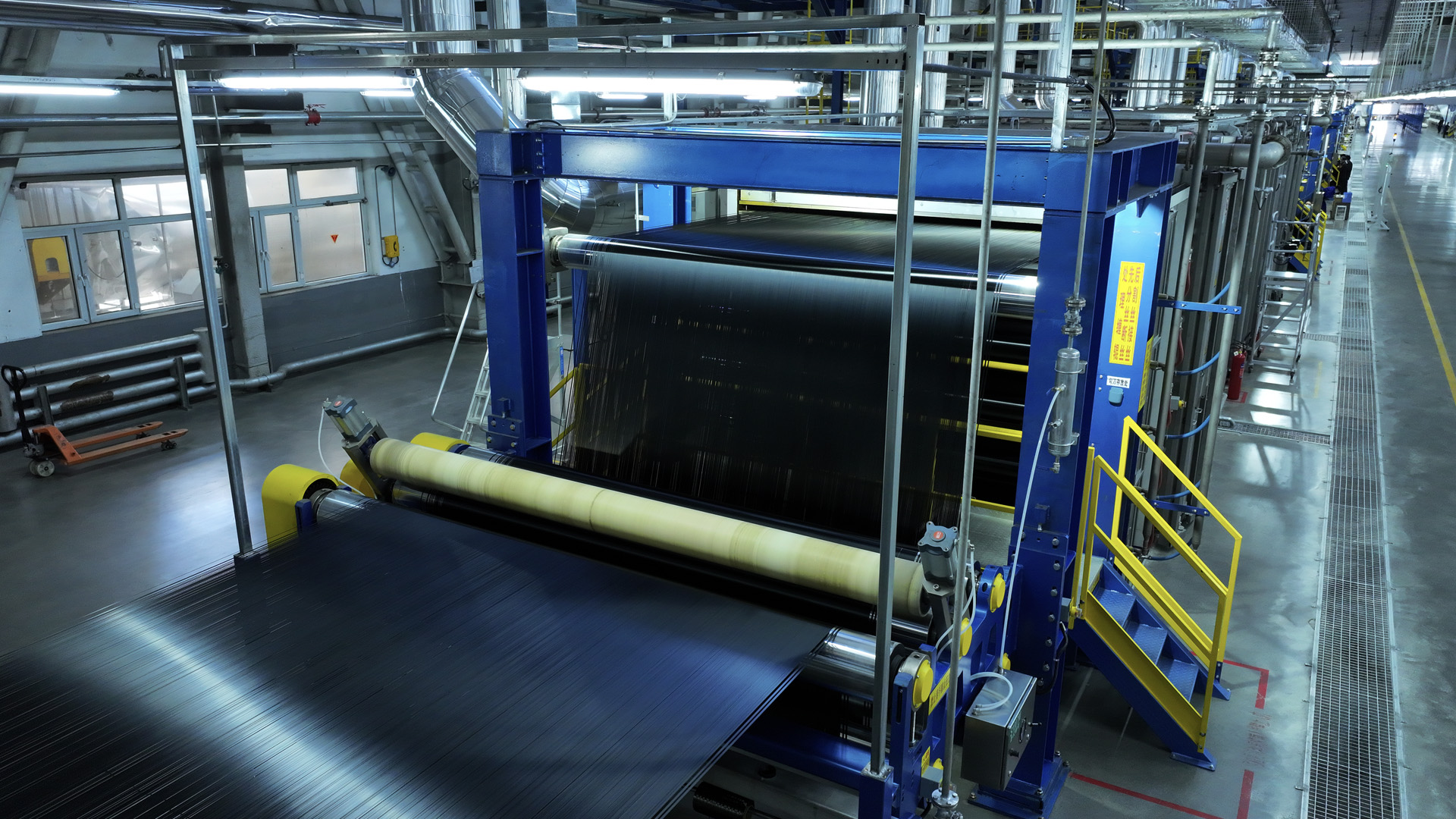
In early November, Hengshen's first batch of 1 ton wet-jet wet-spun carbon fiber used in pressure vessels was successfully rolled off the production line. According to the plan, this one ton of carbon fiber will be sent to customers who have already booked in advance.
"A customer is already using our carbon fiber to make bottles. First make 2 bottles with 50 kg proofs. The relevant test data will be available at the end of November." Hengshen related personnel told New Materials Online®.
It is understood that carbon fiber for Hengshen pressure vessels is in the product promotion period. T700-grade carbon fiber HF30F-12K has been launched. After the relevant experiments are passed, Hengshen will launch HF30F-24K carbon fiber according to customer requirements.
Hengshen said that at this stage, it is mainly targeting the domestic pressure vessel market. On the one hand, the domestic market has a large increase and there is still a vacuum zone. On the other hand, compared with foreign carbon fiber suppliers, the price strength and product coefficient are not adjustable. Hengshen Have more advantageous prices and product after-sales service capabilities. "Hengshen's carbon fiber is designable, and we can adjust our carbon fiber according to the resin coefficient of the customer."
At the same time, Hengshen also formally stated that pressure vessels will be one of its focuses in the civilian market. After all, in terms of technical functions, carbon fiber can make cylinders create higher social value, which in turn can bring higher commercial value space for customers.
But from an objective point of view, the actual progress of wet-spun carbon fiber for pressure vessels also depends on the development of related application technologies and multi-party cooperation. After all, the application of heat for this ascending carbon fiber pressure vessel in the country still needs to be promoted by the entire industry.
Address:No. 1809, Jianhu Road, Keqiao District, Shaoxing City, Zhejiang Province
Tel:0575-8488 6688
Fax:0575-8413 8800
Email:office@jgtec.com.cn
Copyright © 2026 Zhejiang Jinggong Integrated Technology Co., Ltd 浙ICP备14023678号-1
 浙公网安备 33060302000366号
Technical Support:yushangweb